There is something that happens when you pick up a miniature object that is well made. Something shifts in your attention. The world at that scale suddenly demands a different quality of looking, and the looking itself becomes pleasurable in a way that's hard to account for entirely. You examine things you'd normally pass without a second glance. You notice the way the grain of the wood runs, the precision of a joint, the proportional accuracy of a small door or a tiny window. Miniatures do something to perception that full-sized objects don't. Here's an attempt to explain why.
The mastery argument
The most obvious explanation for the appeal of miniatures is the implied mastery they represent. To make something very small and very accurate requires a level of skill and precision that full-sized construction doesn't always demand. When you look at a well-made miniature, you're looking at proof of what human hands and minds can achieve when pushed to work at a scale that allows almost no margin for error. There's something admirable and slightly thrilling about that.
This is part of the appeal of dollhouses, of model railways, of architectural scale models, of the entire craft tradition of miniature painting. The discipline required is extraordinary, and the finished object carries visible evidence of it. The enjoyment of looking is partly an enjoyment of the competence that produced the object.
The control argument
Miniature worlds are worlds in which everything is at human scale, which is to say they're worlds in which humans are, for once, the dominant presence. A landscape that in reality would dwarf us becomes, in miniature, something we can hold in the palm of a hand, survey from above, arrange and rearrange according to our preferences. There's a particular satisfaction in this that psychologists have noted, a sense of mastery over a world that in full size is consistently beyond our control.
This might be why miniatures appeal particularly strongly to people who work in demanding or chaotic environments. The miniature world is orderly, manageable, and responsive to the maker's intentions in a way that the actual world rarely is.
The memory argument
Miniatures also function as containers for memory in a way that full-sized objects can't. A miniature garden shed is not just a decorative object; it's a prompt for every real shed the viewer has ever known, every allotment visit, every summer afternoon spent in a space that smelled of wood and compost and oil. The smallness of the object seems to concentrate rather than diminish its associative power.
This is a well-documented psychological phenomenon. Objects at a certain scale activate a different mode of perception and recollection than full-sized equivalents, and the memories they prompt tend to be vivid and specific in a way that's disproportionate to the object's size. A miniature railway signal box on a desk doesn't just say "railway." It says a specific thing about a specific memory of a specific place.
The craft argument
There is also the pleasure of making miniatures, which is distinct from the pleasure of looking at them. Assembling a flatpack wooden kit, fitting precise pieces together, gluing joints, sanding, painting, is a process that demands the same quality of focused attention that the finished object rewards in the viewer. The making is meditative in a way that's related to but distinct from the satisfaction of making something full-sized.
The research on craft and wellbeing consistently finds that the focused attention required by precise making work produces measurable reductions in anxiety and improvements in mood. Miniature making, perhaps more than any other craft, demands exactly the kind of focused attention that switches off the parts of the brain responsible for rumination and worry.
Why it matters that they're well made
Not all miniatures work this way. A cheap plastic miniature, however small and however detailed it appears in a product photograph, doesn't produce the same quality of engagement. The material matters. Wood, particularly natural wood with visible grain, has a warmth and presence that plastic doesn't. The precision of a laser-cut join, where pieces fit together exactly as designed, produces a satisfaction that a roughly made equivalent doesn't.
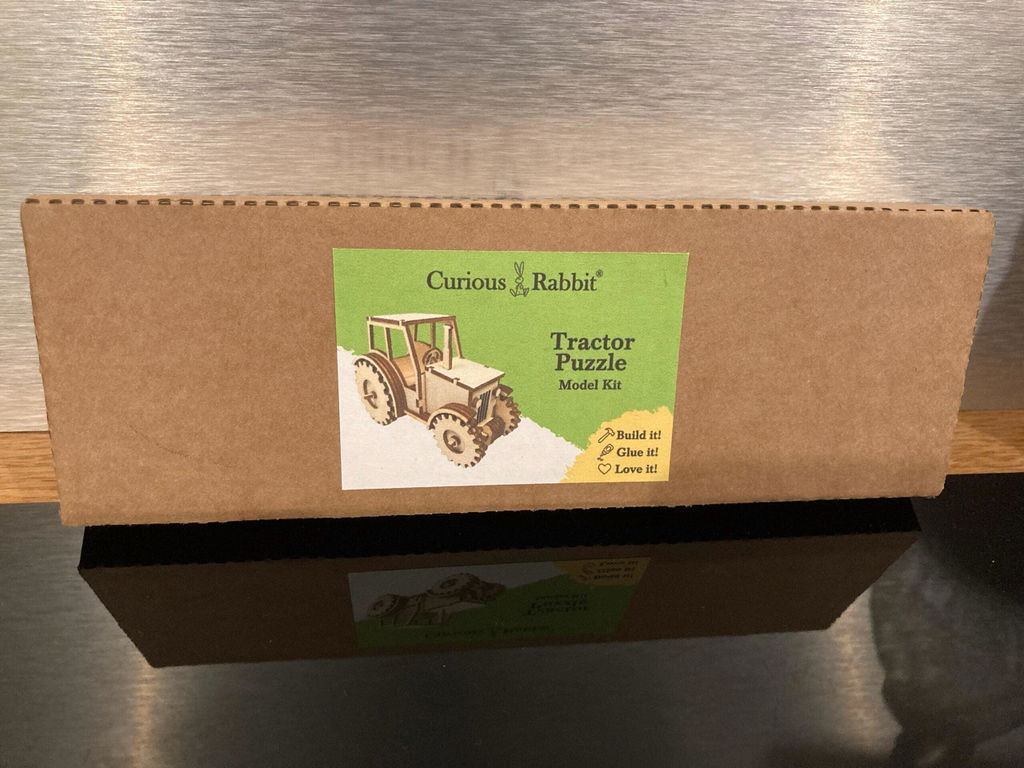
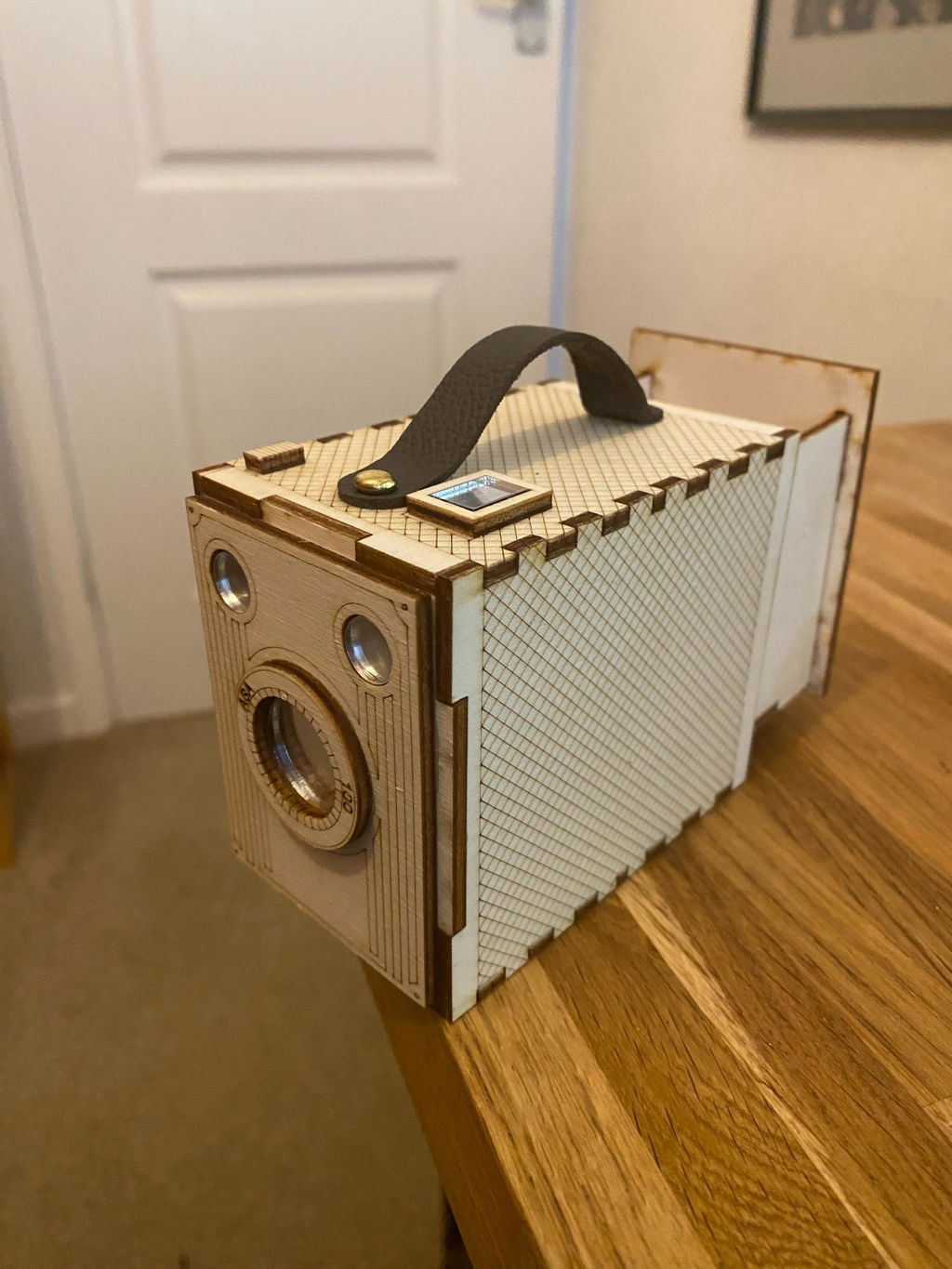
This is why Curious Rabbit's approach, laser-cutting in Wales from sustainably sourced wood, producing pieces with tight tolerances and visible craft, works as well as it does. The Brownie Camera kit, the railway signal box, the bathing hut, the Penfold Pillar Post Box: each of these is a miniature that earns sustained attention rather than a passing glance. Browse the full range at curiousrabbit.com.
The simplest explanation
Perhaps the most honest explanation is the simplest one. Miniatures are delightful. They produce a particular kind of pleasure that doesn't require much justification. The world is better with well-made small things in it, and the impulse to make them and to look at them carefully is a good impulse to have.
Curious Rabbit makes laser-cut wooden gifts and model kits, designed and made in Wales.